
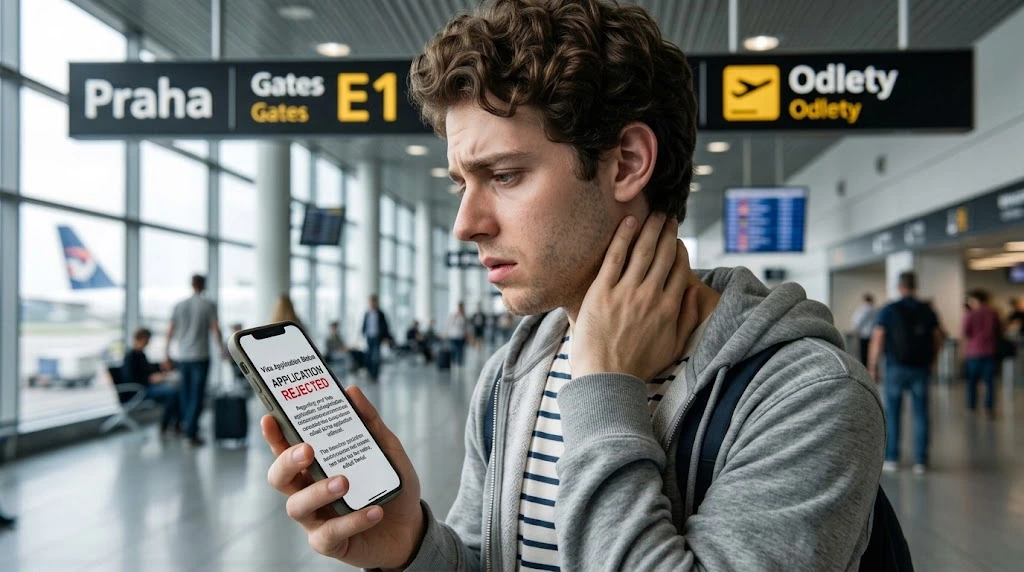
Most Common Reasons for Czech Student Visa Rejection (And How to Avoid Them)
Applying for a Czech student visa is a crucial step if you plan to study in the Czech Republic as a non-EU student. While many applications are approved each year, Czech student visa rejection is far more common than applicants expect.
In most cases, a Czech student visa gets rejected not because the student is unqualified, but because the application was incomplete, legally inconsistent, or improperly prepared.
Understanding the most common reasons for Czech student visa rejection can significantly increase your chances of approval and prevent academic delays.
Below are the top reasons why a Czech long-term visa for study may be denied and how to avoid costly mistakes.
1. Insufficient or Invalid Proof of Funds
Failing to meet Czech financial requirements is one of the most common reasons student visa applications are rejected. The Ministry of the Interior (MVČR) and Czech embassies enforce strict mathematical calculations and document standards to verify you can support yourself without working illegally or relying on state aid.
If your balance falls short by even a small margin, or if your banking paperwork fails to meet Czech formal standards, your application will face immediate delays or outright refusal.
Crucial Compliance Requirements to Avoid Rejection:
Beware of Unexplained Sudden Deposits: Unusually large, last-minute lump-sum transfers right before printing your statement often trigger red flags during consular interviews, raising suspicion of temporary “borrowed” funds.
Meet the Exact Statutory Balance: Ensure your total account balance covers the entire validity of the visa. Czech law calculates this using statutory subsistence minimums for the duration of your intended stay—always hold a healthy buffer above the minimum threshold to account for currency fluctuations.
Account Ownership & Payment Card: The bank account must be in your name (or supported by a notarized sponsor affidavit), and you must present an active international payment card (Visa/Mastercard) issued in your name linked directly to that account.
Official Bank Stamping & Letterhead: Informal online banking screenshots or unverified balance summaries are rejected on the spot. You must submit an official bank letter or stamped statement confirming the account balance, currency, and cardholder details.
Sworn Czech Court Translations: Any bank statement or letter issued in a language other than Czech must be accompanied by an official, bound Czech sworn court translation (soudně ověřený překlad).
Need Help With Your Czech Student Visa Application?
2. Missing Documents or Ignoring Official Deadlines
If your application is missing required paperwork or contains errors, the Ministry of the Interior (MVČR) or the Czech embassy will issue an official notice known as a Výzva k odstranění vad žádosti (Request to Remedy Defects in the Application).
This notice outlines exactly which documents are missing or invalid and sets a strict deadlinetypically between 10 to 60 days to resolve the issue. If you fail to respond before this window closes, the ministry will terminate the proceedings and reject your student visa.
Crucial Tip: You Can Extend a Výzva, But You Cannot Ignore It
Deadlines set in a Výzva are legally binding, but they are not strictly unmovable.
If you are given 10 days to provide a new bank letter or certified translation and your bank requires two weeks to issue it, you must formally request an extension (Žádost o prodloužení lhůty) before the original deadline expires.
State the exact reason for the delay, provide proof that the document is already in progress (e.g., bank receipt, appointment confirmation), and request a specific number of extra days. The immigration authority routinely grants reasonable extension requests—what guarantees an automatic rejection is remaining silent and letting the deadline lapse.
Rules for Handling Official Correspondence:
Never Ignore the Notice: The authorities do not send reminders. Silence is treated as abandonment of the application.
Monitor Official Channels Continuously: Check your tracking status, email spam folder, physical mailbox, or Datová schránka daily.
Act on Day One: Begin gathering the missing document the moment the Výzva arrives; apostilles and sworn court translations take time.
File an Extension Immediately: If a third party (bank, court, university) cannot meet the deadline, submit a written extension request to the authority before it expires.
3. Errors in the Application or Supporting Documents
Czech immigration officials review visa dossiers with strict legal formalism. Even minor technical errors or clerical oversights can stall an application for months or trigger an outright denial.
Common Application Errors That Trigger Scrutiny:
- Discrepancies in Personal Details: Slight spelling variations or conflicting transliterations across your passport, university acceptance letter, bank statements, and criminal record check raise immediate identity flags.
- Invalid Proof of Accommodation (Doklad o ubytování): Submitting housing documents without a properly notarized landlord signature (úředně ověřený podpis), relying on unauthorized sublets, or using landlords not officially registered in the Czech land registry (Katastr nemovitostí).
- Non-Compliant Health Insurance: Purchasing basic travel insurance rather than statutory Czech Comprehensive Health Insurance (komplexní zdravotní pojištění) with the legally mandated coverage minimums from an authorized provider.
- Incomplete Application Forms: Leaving required fields blank, writing ambiguous answers regarding your study program, or entering inconsistent dates of intended stay.
- Missing or Mismatched Signatures: Forgetting mandatory signature fields or providing a signature that does not match the specimen signature page in your travel passport.
Czech immigration officers cross-check every detail across official registers. Inconsistencies between your university confirmation, housing paperwork, and visa application will immediately result in an official defect notice (výzva) or application refusal.
4. Unclear or Weak Purpose of Study
Your supporting documents must clearly demonstrate that your primary purpose is study. The Ministry of the Interior (MVČR) and consular officers thoroughly assess whether your academic trajectory is credible or merely an attempt to bypass standard immigration routes.
If your university acceptance letter is ambiguous, your chosen program appears inconsistent with your academic or professional background, or your overall progression lacks logical continuity, your Czech long-term visa for study may be rejected.
What Immigration Authorities Scrutinize:
- Genuine Enrollment in an Accredited Institution: Your official acceptance letter (potvrzení o studiu) must come from an accredited study program recognized by the Czech Ministry of Education (MŠMT). Non-accredited language courses or unverified private academies often fail to qualify under statutory visa criteria.
- Logical Academic Progression: Major, unexplained shifts in your academic path (e.g., holding a Master’s degree in engineering and applying for a beginner certificate in an unrelated field) or multi-year gaps without clear documentation raise immediate suspicion.
- Consular Interview Preparedness: If summoned for an interview, you must be able to speak fluently about your curriculum, subjects, university campus location, and future career plans without hesitation.
- Realistic Intention to Complete Your Studies: You must show a clear, coherent connection between your previous education, language proficiency, and the specific program you are entering.
A vague or poorly explained study purpose is a major red flag that often leads to an immediate denial.
5. Previous Visa Refusals or Immigration Issues
Your immigration history matters significantly during consular review. Czech consular officers and the Ministry of the Interior (MVČR) cross-reference shared security databases including the Schengen Information System (SIS) to assess applicant credibility.
High-Risk Red Flags Include:
- Overstayed a Schengen Visa: Prior violations of the 90/180-day rule or remaining in the Schengen Area on an expired permit.
- Had a Previous Visa Rejected: Undisclosed or unresolved visa refusals from the Czech Republic, other Schengen member states, or third countries (such as the UK, US, or Canada).
- Worked Illegally in Another Country: Documented unauthorized employment or commercial activity on a tourist or student status.
- Provided Inconsistent Travel History: Contradictions between entry/exit passport stamps, declared itinerary dates, and official application forms.
Any of these factors will substantially increase scrutiny during your Czech student visa evaluation.
Why Honesty is Mandatory:
Transparency is critical. Attempting to hide previous issues, omit prior refusals, or submit altered travel logs will be flagged as intentional deception. This does not just worsen your situation—it guarantees an immediate rejection and can result in a multi-year Schengen entry ban. Always disclose past issues honestly and provide clear supporting documentation showing how your circumstances have changed.
How to Reduce the Risk of Czech Student Visa Rejection
Most Czech student visa rejections are completely preventable. The vast majority of denials stem from avoidable procedural errors and administrative oversights, including:
- Incomplete Documentation: Missing statutory attachments, unverified certificates, or documents lacking required apostilles or superlegalizations.
- Insufficient Financial Proof: Failing to meet statutory minimum balance calculations, missing international payment cards, or submitting non-compliant bank statements without sworn Czech translations.
- Incorrect Health Insurance: Submitting basic travel medical insurance instead of an approved policy meeting statutory Czech Comprehensive Health Insurance standards.
- Weak Accommodation Confirmation: Relying on unverified housing providers, unnotarized landlord signatures, or invalid proof of accommodation (Doklad o ubytování).
- Application Errors: Discrepancies between application forms, passport details, and university confirmation letters.
A carefully prepared application that fully complies with Czech student visa requirements significantly increases your approval probability and prevents costly semester delays.
Before applying, review the complete Czech student visa requirements guide to ensure all your documents strictly meet official legal standards.
Professional Czech Student Visa Assistance
If you want to minimize the risk of Czech student visa rejection and ensure your application strictly satisfies official immigration standards, expert guidance makes a decisive difference.
Wise Expats provides structured Czech student visa assistance for non-EU students applying for a long-term visa for study in the Czech Republic.
From comprehensive document review and certified Czech court translations to precise form preparation and final embassy readiness, we guide you step by step to eliminate errors, avoid administrative delays, and maximize your approval chances.

Leave a Reply